
Healthy Food
Balanced meals, carb counting, kid-friendly recipes.
Exercise
Safe play, sports and physical activity guidelines.
School Life
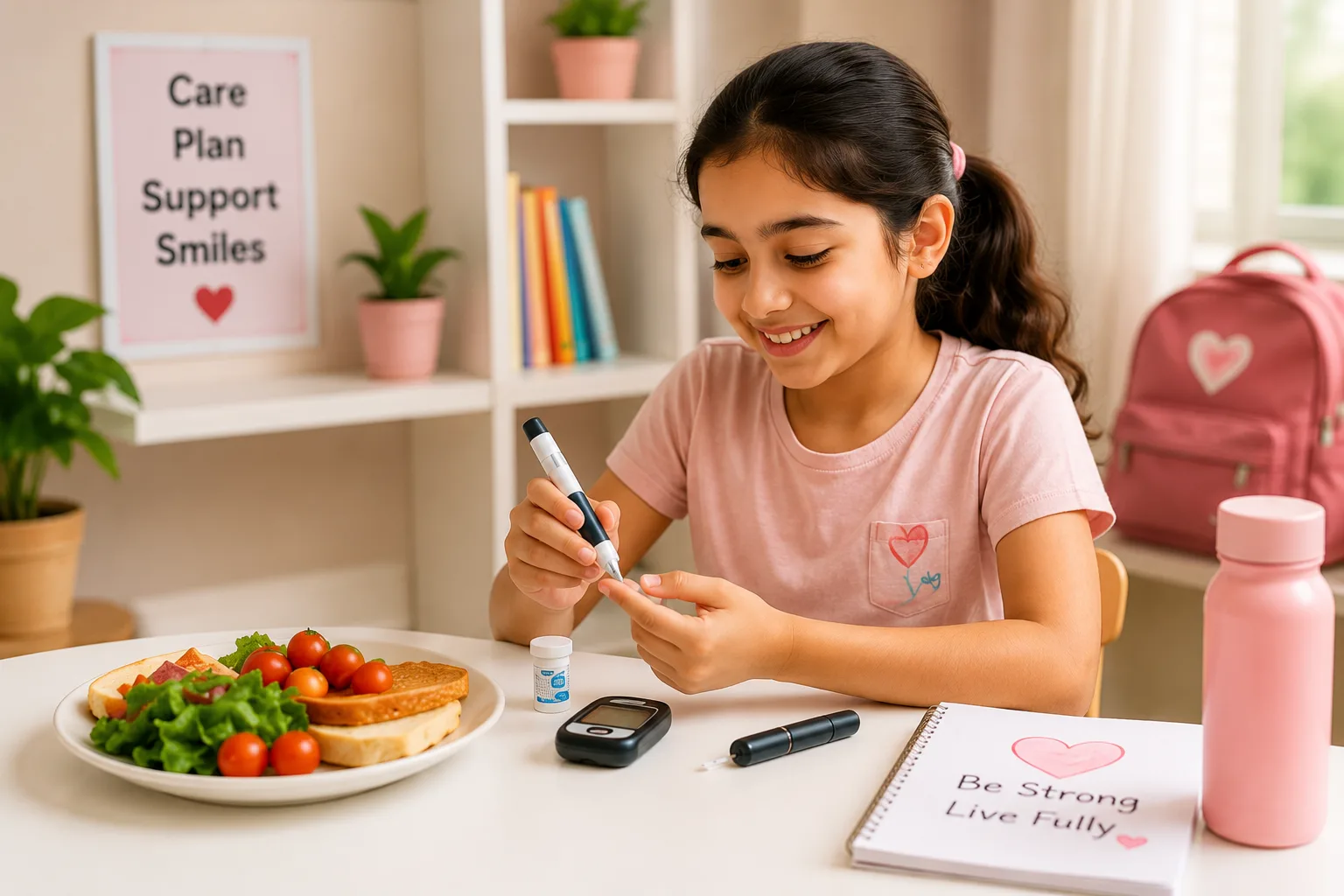
Work with teachers through simple checklists and care plans to ensure children receive safe and consistent diabetes support at school.
Travel
Guidance for packing insulin, managing time-zone changes, and maintaining diabetes care routines during travel.
Mental Health
Emotional wellbeing for kids, teens and parents.
Daily Routine
Rhythms that make management feel effortless.
- Everyday life
Living with diabetes, fully.
7:00
Wake & check blood sugar
10:30
Snack check
16:00
Activity / play
22:00
Bedtime check
7:30
Insulin + Breakfast
13:00
insulin + Lunch
19:30
insulin + Dinner
What are the common symptoms of high blood sugar (hyperglycemia)?
| Hyperglycemia occur when there is too little insulin or too much food/stress. Classic signs include extreme thirst, frequent trips to the bathroom, dry mouth, blurred vision, headaches, and feeling unusually tired. If blood sugar remains high (above 250 mg/dL) for an extended period, the body can produce ketones, which can lead to Diabetic Ketoacidosis (DKA). |
How do I store unopened insulin vials or pens?
Can a child with Type 1 Diabetes eat sweets or birthday cake?
| Yes, children with Type 1 Diabetes can enjoy sweets and treats occasionally, just like any other child. T1D is managed by matching insulin doses to the food eaten. When having cake or sweets, you must count the carbohydrates and give a matching dose of rapid-acting insulin. However, sweets should be eaten as part of a balanced meal rather than on an empty stomach to prevent blood sugar spikes. |
What should a school 'Hypo Box' contain?
| A School Hypo Box should contain fast-acting carbohydrates such as glucose powder to treat low blood sugar quickly. It should also include a backup glucose meter, emergency glucagon, the child’s diabetes care plan, and emergency contact numbers, along with clear instructions for school staff. |
What should I do if blood sugar remains high despite correction doses?
| If blood sugar remains high (above 250 mg/dL) after taking a correction dose, check for ketones first. High blood sugar with positive ketones can lead to Diabetic Ketoacidosis (DKA). If ketones are negative, the high sugar could be due to a clogged pump cannula, a bad injection, or spoiled insulin. Drink plenty of water, consider using a syringe or new pen in a different site, and monitor closely. |
Instant Patient Help desk
Simulated support with Dr. Krishnan
Search clinical guidelines, expand doctor tips, and watch real-time step-by-step visual lesson animations to solve everyday challenges.
- Help Center
Interactive Knowledge Base
- Everyday life
Educational videos
A curated library from doctors, families and educators — designed for every age.
- Take it with you